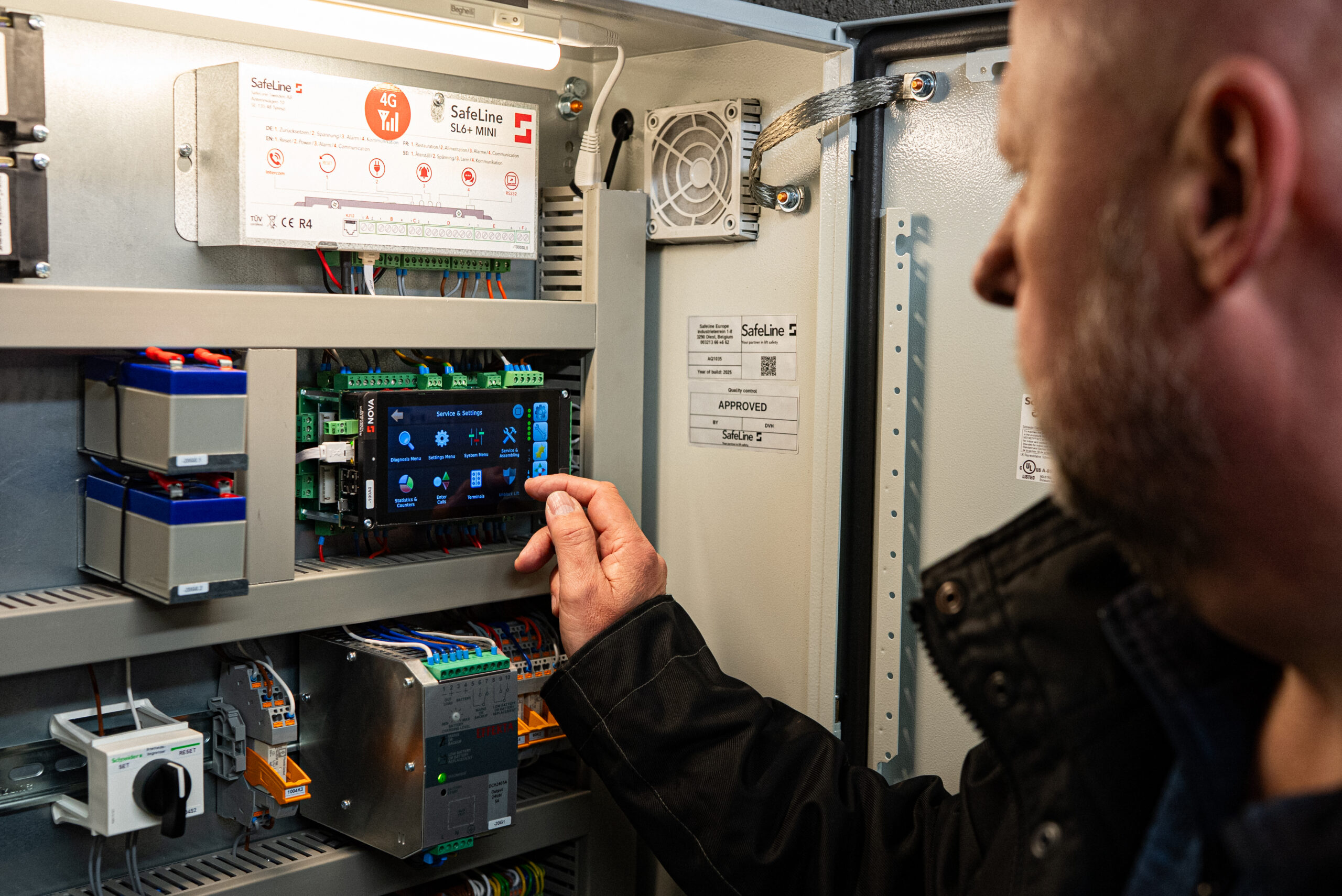
A long lift lifespan doesn’t happen by chance – it’s engineered. And in high-demand environments, software makes the difference. Because no matter how solid the mechanical system is, without intelligent control and early insight, its lifespan will suffer. That’s why more and more teams turn to lift controllers that are built for precision, performance, and predictive diagnostics – not guesswork.
Early detection is key to longer system life
Many lift failures begin with small shifts in performance – a delay in door operation, a subtle brake imbalance, a change in acceleration. These early signs often go unnoticed until they become costly.
With real-time monitoring from a modern lift controller, building operators and service teams can detect:
- Unbalanced mechanical wear
- Environmental stress factors
- Variations in travel speed and timing
- Irregular power usage or control signals
Addressing these issues early helps prevent secondary damage and protects overall lift lifespan.
From scheduled service to condition-based action
Traditional maintenance schedules don’t reflect how systems are actually used. Predictive diagnostics enable a shift to condition-based servicing, helping you:
- Align service intervals with component status
- Avoid unnecessary part replacements
- Identify potential failures before they impact users
This approach reduces unplanned downtime and supports a longer, more stable operational life for the lift.

Why legacy controllers shorten lift lifespan
Older control systems often lack diagnostic insight, integration capability and secure connectivity. This limits your ability to:
- Monitor system health over time
- Understand usage patterns
- Detect anomalies before they escalate
Without these capabilities, faults are caught too late – and lifespan is lost to preventable wear. Upgrading the controller is one of the most effective ways to extend your lift’s life.
Choosing technology that supports long-term performance
Maximizing lift lifespan depends on more than just maintenance.
It requires:
- Robust, future-ready control systems
- Continuous performance data
- Integration with modern building infrastructure
- A maintenance team supported by actionable insight
At Safeline, our controllers are designed to meet these needs from day one – with secure architecture, smart diagnostics, and seamless retrofit support.
Whether you’re managing a residential portfolio, a hospital, or a public facility, Safeline gives you the tools to extend lift life with less guesswork and greater control.
Want to improve uptime and extend the life of your lift systems?
Talk to us about the right control solution for your building – or explore our product range for smarter upgrades.
FAQ
How can I extend my lift’s lifespan?
Use a controller with real-time diagnostics, perform condition-based maintenance and act on early warning signs. Monitoring data is essential to preserving lift lifespan.
What’s the average lift lifespan?
With proactive maintenance and timely upgrades, lifts can operate reliably for 20–30 years. Controllers and moving components may require replacement earlier based on usage.
Do I need to replace the entire system to improve lift lifespan?
Not necessarily. Upgrading the controller can deliver modern diagnostics and performance benefits without replacing the entire lift installation.
How does predictive maintenance impact lift lifespan?
It helps detect issues before they cause damage, extend component life, and reduce overall system stress – all of which contribute to longer service life.
Is controller technology really a limiting factor in lift lifespan?
Yes. Outdated controllers make it harder to see how the system is performing, delaying service decisions and increasing wear. A modern controller extends both visibility and control.